Dental implants are a dependable and durable way to replace lost teeth while regaining both beauty and function. Designed to closely replicate real teeth, implants consist of a thin titanium post that is surgically implanted into the jawbone, where it works as an artificial tooth root. Once the implant integrates with the bone, a bespoke crown, bridge, or denture is fitted, creating a stable and natural-looking replacement that merges flawlessly with the rest of the smile.
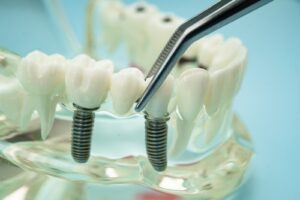
One of the key advantages of dental implants is their endurance and robustness. Unlike typical dentures or bridges, implants are connected directly into the jawbone, allowing them to operate much like natural teeth. Daily tasks like eating and talking are safer and more comfortable because of this consistency. Patients can eat a variety of meals without having to worry about discomfort or slippage, which is a common problem with removable tooth replacement solutions.
Additionally, dental implants are crucial for maintaining oral health. Due to a lack of stimulation, the surrounding jawbone may start to deteriorate once a tooth is lost. Implants help prevent this bone loss by providing the stimulation needed to preserve bone density and facial structure. This not only improves long-term dental health but also helps minimize the sunken appearance that might develop over time with missing teeth.
The adaptability of dental implants is an additional advantage. They can be used to support full-arch restorations like implant-supported dentures, or they can be used to replace one or more missing teeth. Unlike traditional dental bridges, which require adjacent teeth to be altered, implants maintain the integrity of healthy surrounding teeth because they do not depend on them for support.
The dental implant method is carefully organized to ensure long-term success. It begins with a thorough review of dental health, bone structure, and general suitability for therapy. After the implant is implanted, a healing phase allows the bone to join with the implant through a process called osseointegration. Once healing is complete, the final restoration is applied, restoring the smile’s appearance and function.
Caring for dental implants is similar to caring for natural teeth. To maintain the health of the surrounding gums and the stability of the implant, daily brushing, flossing, and regular dental checkups are crucial. With proper maintenance, dental implants can last for many years, typically making them a cost-effective alternative over time.
Beyond simply replacing lost teeth, dental implants improve comfort, self-esteem, and overall quality of life. By providing a solid, natural-looking, and long-term replacement for missing teeth, implants continue to be one of the most trusted and advanced alternatives in modern dentistry.